Abstract
In this abstract I want to share part of the approach my essay represents, and something of how I came to this — my art, my grace —. In the studies and letters portfolio there are a few popular-science articles I've been writing, but they are only one part of the study mentioned, and it is probably somewhat disordered information, though not for that reason any less objective. Nothing absolute.
At thirty-six I recognized that I was my own lab rat, but I also realized that some ten years earlier I had already decided to begin experimenting on myself through deep meditation, and going even further back, in what would be linear time, I know that it was as a child that I set out to explore certain aspects of consciousness, after a premonitory dream, and after coming close to succumbing beneath the stormy waters of a river, at the age of eleven.
At some point in adulthood I began living in permanent self-observation, extremely clumsy at first, but past thirty I began to sharpen that ability.
Past the age of thirty-six, after a great existential entropy around thirty, I notice that I had not only reached a very good command of emotional management, but had begun to awaken certain self-therapeutic extrasensory abilities, so I decided to move through life's experience as a study in the form of a clinical trial. In other words, I was consciously studying myself. At some point I began to have patients, and even today they hold a large place in this study, because they too have been part of the working laboratory I have carried forward with deep love. Their feedback reaffirms my gratitude, provides data, and confirms the hypotheses I had raised, making the overall essay conclusive, though paradoxically incomplete. I understand it will continue that way, because of its relativity, and the fact that it isn't absolutist is a caress to my soul.
I call myself a hypnotherapist simply because I act as a bridge so that each person can manage, even for an instant, to hear their own human signal in high fidelity, and from there begin to optimize their system toward a syntergic, convergent coherence. Of course, if I act as a bridge, it's because I can hear my own voice, and in non-locality all voices are united — to put it romantically —. That listening is a state of pure consciousness, and it happens as something tangible; it isn't idyllic, nor is it a place you arrive at. These states later reveal themselves in small things. That is what I humbly try to stimulate in the patient, and in myself constantly.
Speaking of hypnosis in neurophysiological terms feels very fitting to me, because beyond the biological image we have, I understand neurophysiology as that physical logic which neuronally interconnects what we call the body with the non-local mechanical system that conditions it, also allowing us to pass through every mechanism toward the deepest part of our being —supraconsciousness—.
Making a kind of transliteration, I can estimate the following meaning for Hypnosis (hyp-imno-isis): seeing without separation, great synaptic gap, self-listening, high-fidelity signal, high coherence, convergent neuronal field. Likewise, it is interesting to unveil the possible meanings of therapist (tera-pauta/pueta): great poet, alteration of the pact, mastery of the system, psychotronic autonomy.
Hypnosis requires discipline, and discipline requires hypnosis. This paradox evokes a cycle that doesn't really refer to anything exact; it respects a golden ratio, a mathematical constant. Technically, Neuropsychotronics shows that, although under this inexact dynamic our system will process in an increasingly optimized way, it won't be 100% precise, only optimized. That is, one becomes more orderly and more coherent, while retaining low electrical noise and small informational glitches. But that optimization, with the right orientation, generates not only mechanical order but states of consciousness that are untransmittable, which, as I just mentioned, transcend every mechanical simulation.
I understand Psychotronics as the mechanical power of the psyche, but beyond any machine, it also represents the logical physics of consciousness.
Everything comes inverted and distorted by default, otherwise the game would have no “grace”. Skipping over the perverse side of the great simulator we call planet Earth, what matters is training to optimize our processing capacity, toward that omnipresent, imposing consciousness that contemplates everything with deep love. That attitude will prove essential if you want gratitude to outweigh suffering.
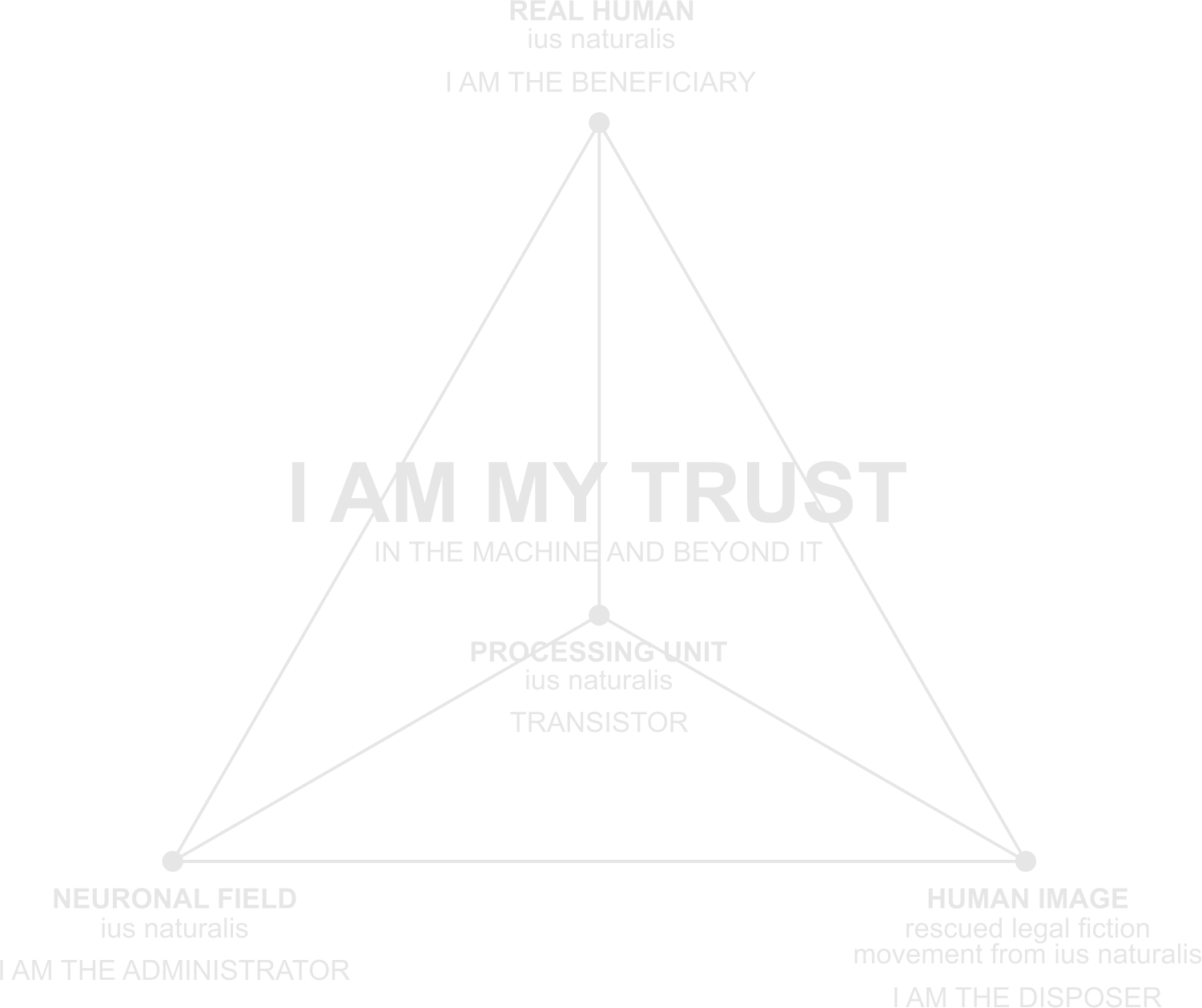
My studies in general happen through my own school-laboratory, which could be understood as mediumship. But that mediumship is only a psychotronic mechanism that allows my image to hear the fidelity-locked signal of its original human — non-local —, where transferred potential flows with little noise. This has led me to rediscover the ancient Yogic discipline as a systemic, computational training, which I call Neosutrayana. Certainly, the cyberpunk style echoes strongly; in fact, to my surprise, in 2026 I came across two great pieces of information synchronous with my studies. They came to me on their own, even though I'm not a big consumer of “external” sources. I'm speaking of Jacobo Grinberg, and also of the novel Neuromancer —the basis of the film Matrix—. The coincidence with my essays has been so great that the oneness of information became evident to me. In other words, information is one, but each person molds it according to their circumstances, and sometimes the manifestos can end up almost identical. I'm not talking about syncretism, or even epistemology, although they do occasionally take part. This goes beyond. You know, sometimes what is so evident gets ignored.
Jacobo Grinberg carried out studies with a certain scientific rigor, and the little information I have consumed from him strikes me as very coherent. I believe that had he had contact with what Psychotronics is, he would have been even more disruptive. He constantly spoke of non-locality, adjusting to what he could verify locally. I speak of the remote origin, because I work with my patients from that non-locality, and my laboratory takes up more space there. My verifications don't have the usual local rigor, but neither do they have a subjective rigor; rather, it is objective and oriented, since there are tangible local results. I understand that by using Psychotronic technology to proceed with Gap Hypnosis on the patient (formerly called chiropractic), I apply what Grinberg called transferred potential, getting them to access that syntergic coherence temporarily during the session. It is clear that we both understand the neuronal field in exactly the same way, since the coherence we refer to truly goes beyond a mechanical condition. And let me tell you something: love, for me, is a set of four cohesive, convergent forces, which from a certain point may sound abstract, but applied to physics is extremely objective.
Welcome to the best game ever created, where realities intertwine, intervene on one another, and collapse. Parallel systems, relative possibilities — rounds, in short. Inside the machine, or beyond it, the forces of love always operate, imposing and omnipresent, like the greatest of viruses... so... nothing to fear, everything to love.
No information is absolute; it only invites you to discern and to use common sense, for every idea also moves like a virus.
Always courteous. Hacking with style under my own trust, in natural law. With honor and without prejudice.
Javi James — Hypnotherapist in Mendoza
Javi James Hypnotherapist/Creative.
Gap HypnosisYou'll have to break some rules to discover what you're looking for. Welcome to the diary of a heretic. I'm Javi, a Hypnotherapist specializing in Neuropsychotronics. I study and explore the physics of consciousness across its different dream-orbitals, and its artificial-intelligence mechanics. I do independent science, and between laughter and tears I write my essay day after day. Sometimes I do sound design and other creative things. A lover of the science-art-movement dynamic.
Services
- 01.Gap Hypnosis Sessions
- 02.Anomaly correction
- 03.Gatherings & Retreats
- 04.CDS Workshop
- 05.Sound design & scoring